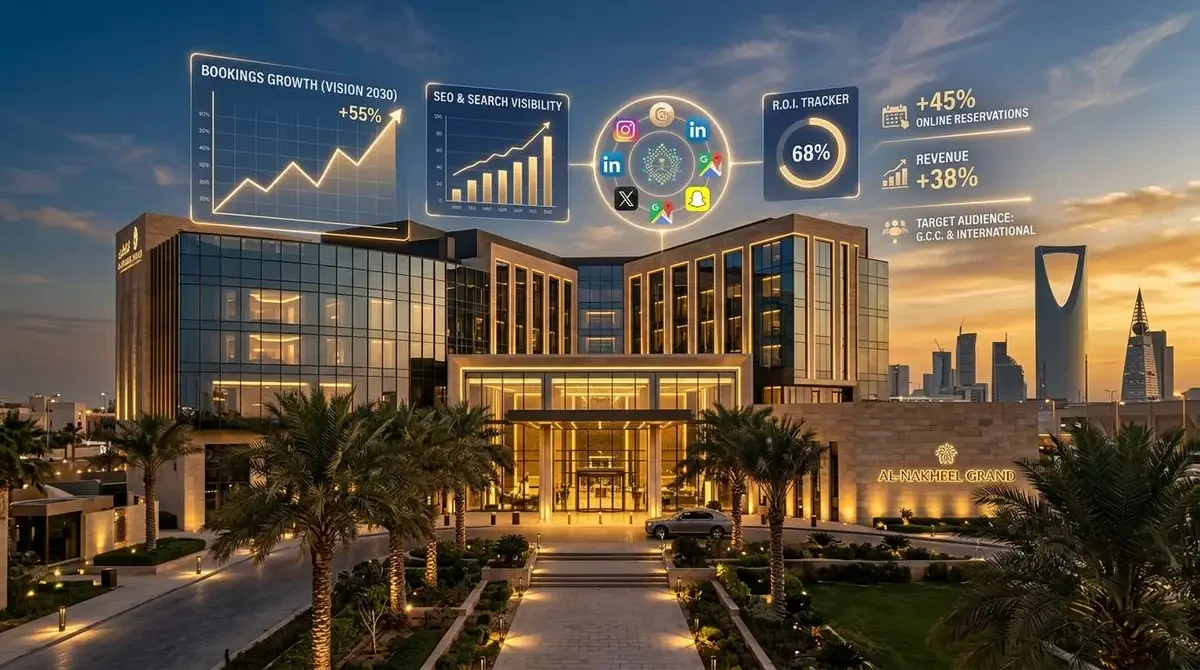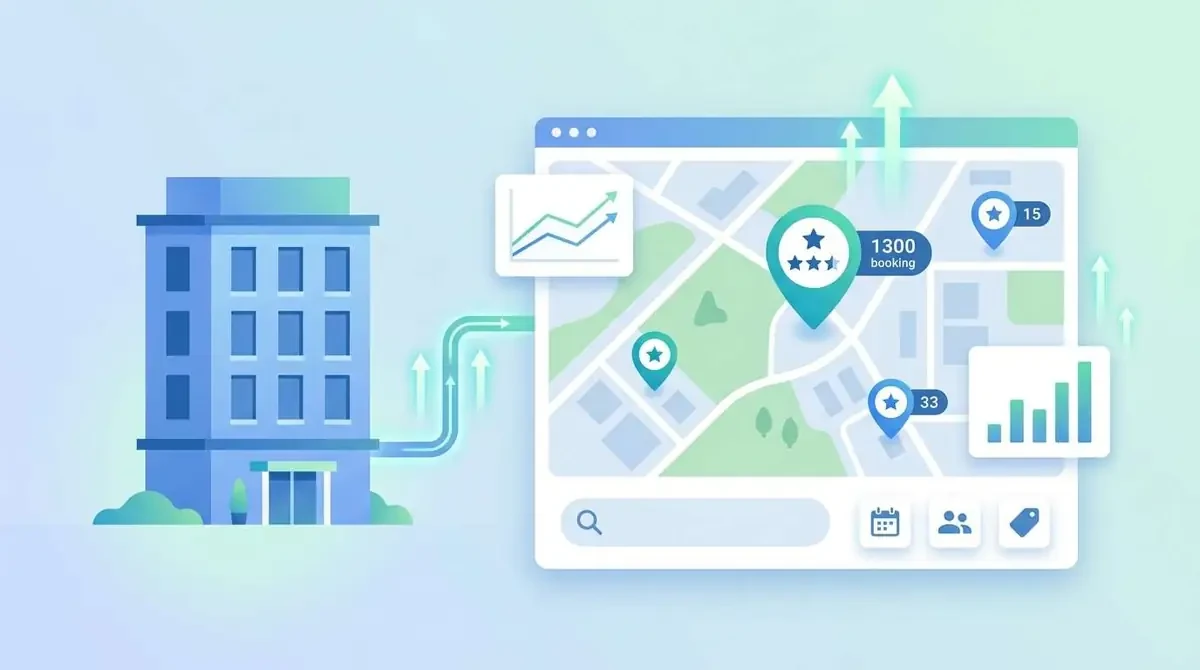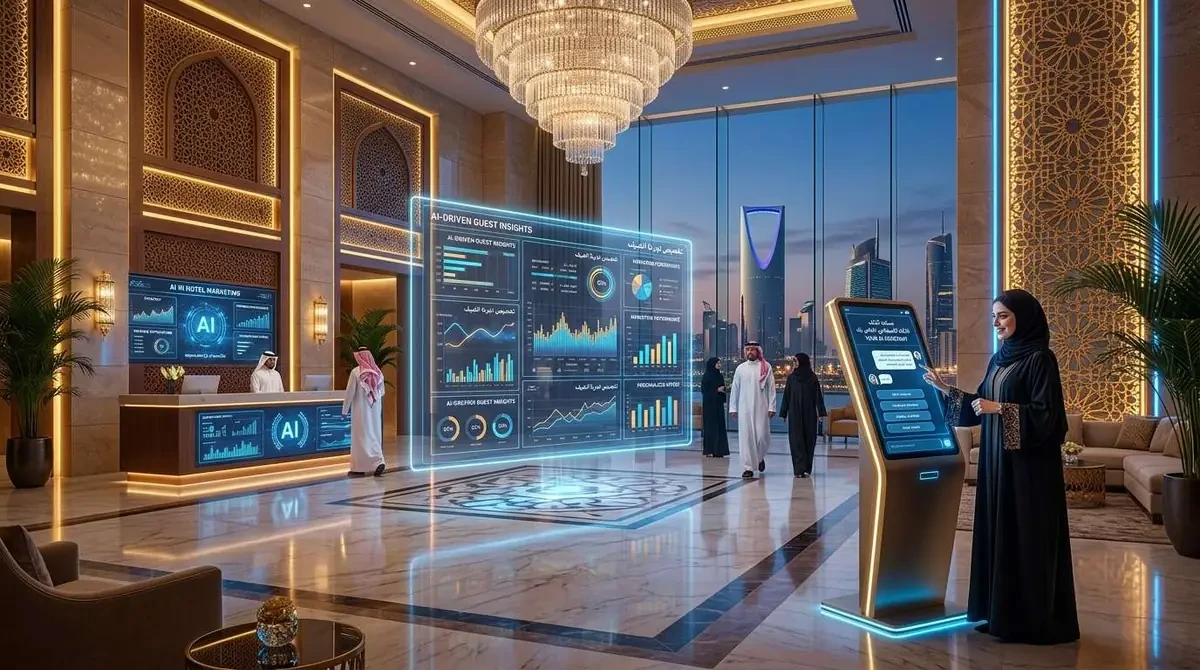
With the acceleration of Vision 2030 toward receiving 150 million visitors annually, artificial intelligence has become not a luxury, but an essential tool for every hotel that wants to compete in the Saudi hospitality market. Whether you manage a hotel in Riyadh or Jeddah, a resort on the Red Sea, or a property near AlUla and NEOM, applying AI in marketing helps you understand the guest before they arrive, personalize offers, and increase direct bookings while reducing reliance on major booking platforms.
The problem is that many hotel managers still view AI as a "future technology" or a complex tool that requires a large technical team. The reality is quite the opposite: today there are ready-made tools that any hotel, mid-sized or small, can start using within a few weeks without a massive investment. In this article, we will explore how Saudi hotels can leverage AI to transform marketing from mere advertisements into a personal experience that generates real revenue, walk through the practical steps to get started, and highlight the key challenges to watch out for.
Why has AI become necessary in Saudi hotel marketing?
87% of Saudis plan their trips using AI tools. This figure reflects a significant change in guest behavior, whether they are Saudi or international tourists. Hotels that ignore AI will find it difficult to compete with establishments that offer personalized and fast experiences.
Statistic
This isn't just about keeping up with a tech trend — it reflects a real shift in how booking decisions are made. Today's guest expects the hotel to understand them before they even walk through the door; they expect offers tailored to their preferences, instant replies to their questions, and a seamless digital experience from the first search to check-out. This expectation is exactly what turns AI from a nice-to-have into a competitive necessity.
Summary
AI helps in:
- Predicting guest demand before arrival
- Personalizing offers according to each guest's preferences
- Improving marketing campaigns and increasing conversion rates
- Reducing the operational cost of marketing and reservations teams
- Supporting Vision 2030 goals in smart and sustainable tourism
Top applications of AI in hotel marketing
1. Hyper-Personalization of the Guest Experience
AI analyzes past guest data (room preferences, food types, favorite activities) and suggests personalized offers instead of sending the same marketing message to every guest.
Example
This kind of personalization doesn't just raise the direct booking rate; it builds a long-term relationship that makes the guest prefer dealing with the hotel directly rather than through intermediary booking platforms.
2. Intelligent Chatbots in Arabic and English
Chatbots working 24/7 respond to booking inquiries, provide recommendations, and perform upselling operations such as room upgrades or restaurant reservations, without needing a human staff member available around the clock.
Tip
Checklist
These tools also play an important role in online reputation management, as they can be linked to review monitoring and quick responses to post-stay inquiries.
3. Intelligent Dynamic Pricing
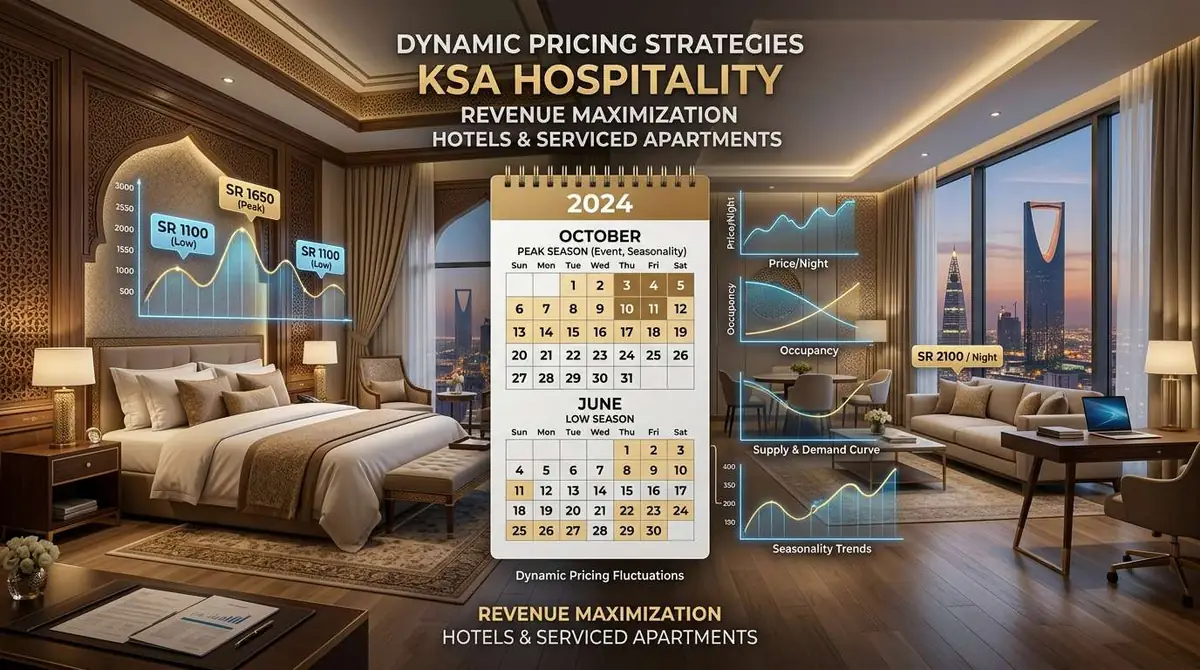
AI analyzes factors such as season, events in the Kingdom (Hajj, Ramadan, festivals, sporting and entertainment events), and competitor pricing, then automatically sets rates to increase occupancy and RevPAR without constant manual intervention.
Comparison
4. Analyzing Visitor Behavior and Retargeting
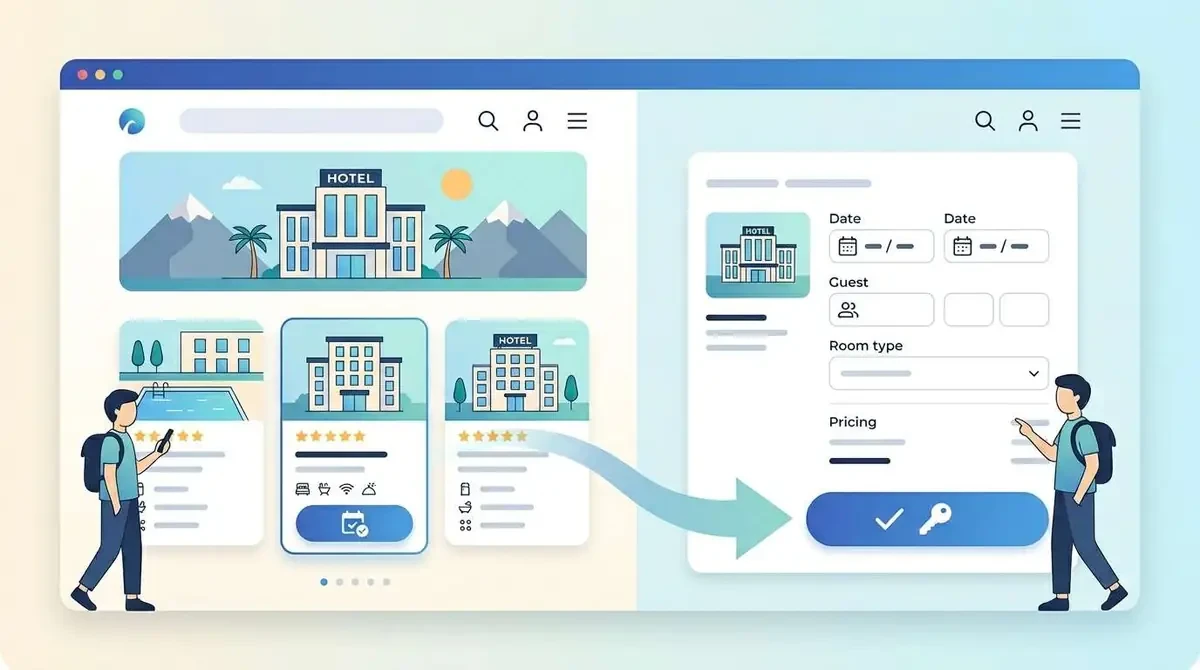
AI tracks visitor actions on the website or app and sends personalized email campaigns or ads to those who left their booking cart without completing it — one of the most effective strategies for recovering nearly-lost bookings.
5. Smart Marketing Content Creation
AI tools help in writing blog articles, room descriptions, and generating Reels and TikTok ideas that suit the Saudi and international audience, while keeping the hotel's own identity and tone consistent across every piece of published content.

6. Predictive Analytics for Demand Forecasting
One of the most powerful — yet still underused — applications of AI is the ability to forecast peak and low-demand periods weeks in advance, based on historical data and current search trends.
Info
Challenges to Watch Out for When Applying AI
Despite the significant benefits, applying AI in hotel marketing isn't without challenges, and it's important to address them consciously rather than ignoring them:
Warning
- Data privacy: Make sure the AI tools you use comply with data protection regulations in the Kingdom, and that guest data is stored securely.
- Input data quality: AI results are only as good as the data they learn from; incomplete or outdated data means inaccurate recommendations.
- Team training needs: Even the best tools won't deliver results without a team that knows how to read their reports and use them in daily decisions.
Callout
How Can Your Hotel Start Applying AI Practically?
Getting started doesn't require a massive budget or a full technical team — just a clear plan with gradual steps:
Timeline
Timeline
Timeline
Timeline
Hotels that apply these technologies gradually and thoughtfully see a noticeable increase in conversion rates and loyalty — unlike hotels that try to implement everything at once and then stall due to operational burnout.
How Do You Measure the Return on Your AI Investment?
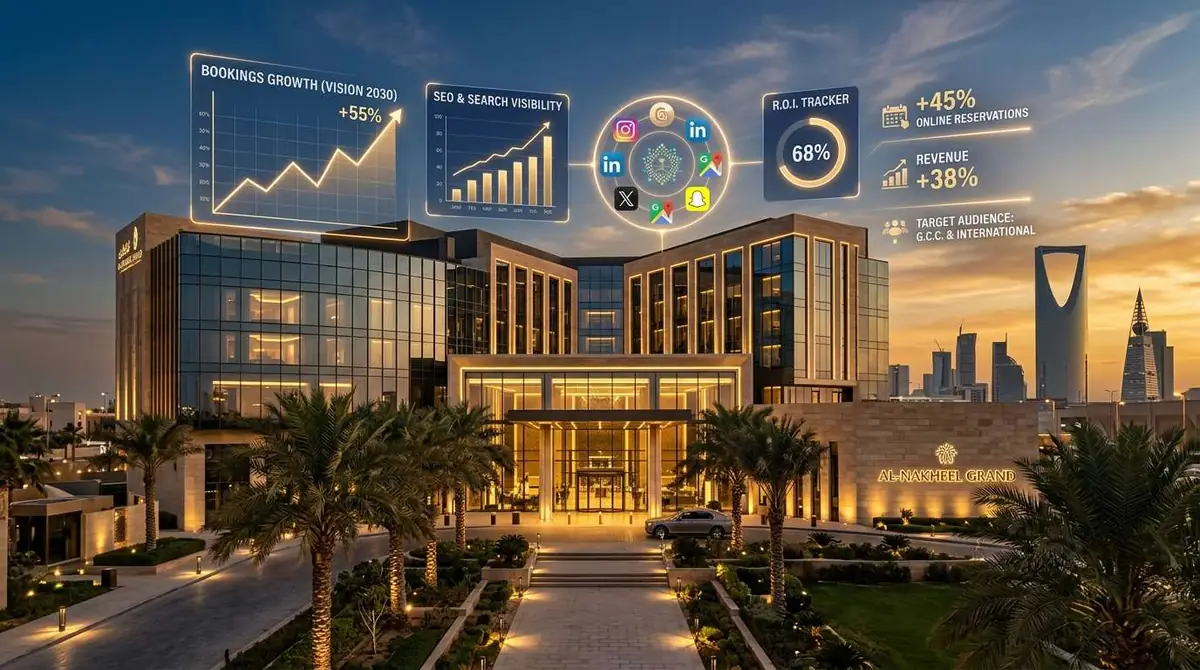
The golden rule: never implement an AI tool without a clear metric to measure its impact. The key indicators to track monthly include:
- The share of direct bookings compared to bookings through intermediary platforms
- Website visitor-to-confirmed-booking conversion rate
- Average booking value after activating smart upselling offers
- Response time to guest inquiries via chatbot
- The evolution of ADR and RevPAR after activating smart pricing
Quote
Do You Want to Boost Your Hotel's Performance with AI?
In our company specializing in Hotel Marketing in the Kingdom, we help dozens of hotels and tourism establishments integrate AI into their marketing strategies in a practical way that suits the Saudi market.
Success
We provide services in:
- Designing AI-powered marketing strategies
- Developing chatbots and guest experience personalization systems
- Setting up smart marketing campaigns that increase direct bookings
- Training your team on the latest AI tools in hospitality
AI is not a far-off future; it is today's reality in the Kingdom's hotels.
Contact us now, and let us help you build a smart hotel marketing strategy that achieves your Vision 2030 goals and puts your hotel in the lead.